
Research Platforms
Configurable laboratory PVD systems for universities, institutes, and advanced R&D
HUANING ZHIKE laboratory-series platforms deliver research-grade vacuum performance, flexible source configurations, and comprehensive measurement integration for academic thin-film research, materials science, process development, and equipment qualification.
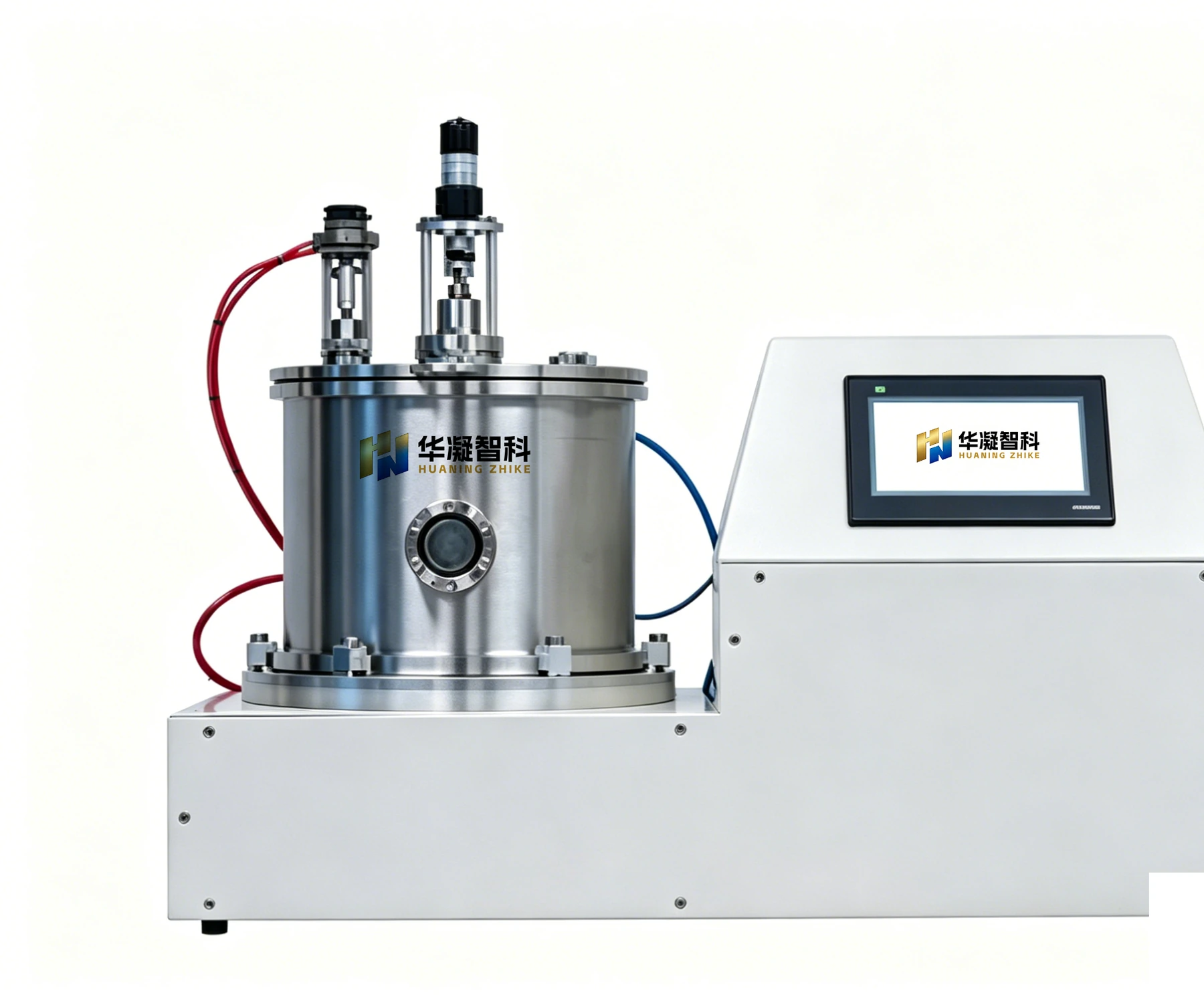
Overview
Academic and industrial research institutions require PVD platforms that combine repeatable process control with configurable chamber, source, fixture, and monitoring arrangements. HUANING ZHIKE laboratory systems are configured at the point of order according to the required deposition process and experiment workflow.
Application Areas
Thin-Film Physics Research
Growth mechanism studies, in-situ characterization, and fundamental materials science of metallic, oxide, and nitride thin films.
Process Development for Scale-Up
Developing and validating PVD coating processes at lab scale before transfer to industrial production equipment.
New Material Exploration
Multi-target co-sputtering for alloy and high-entropy film composition mapping and materials library synthesis.
Device Prototype Fabrication
Research-scale deposition of device functional layers for sensor, photovoltaic, MEMS, and photonics prototypes.
University Training
Hands-on PVD vacuum technology training for graduate students and research engineers.
Coating Service and Sample Processing
Small-volume coating service for research groups requiring specialized films on custom substrates.
Applicable Deposition Methods
Magnetron Sputtering (research-grade) — high flexibility, wide material range, DC/RF/pulsed-DC capability, co-sputtering
Multi-arc Ion Plating (research-scale) — hard coating process development at lab scale for industrial transfer
Electron Beam Evaporation (research-scale) — high-purity evaporation with in-situ monitoring for optical and device research
Composite Platforms — combined sources for maximum process flexibility in a single vacuum environment
Key Process Considerations
Source count and geometry should match the planned research program
CF-flange compatibility enables integration with third-party analytical instruments
Substrate temperature range and uniformity are critical for crystalline film studies
Upgradability is important — design future instrument additions into initial chamber configuration
Process documentation, recipe management, and data export capabilities support research publication workflows